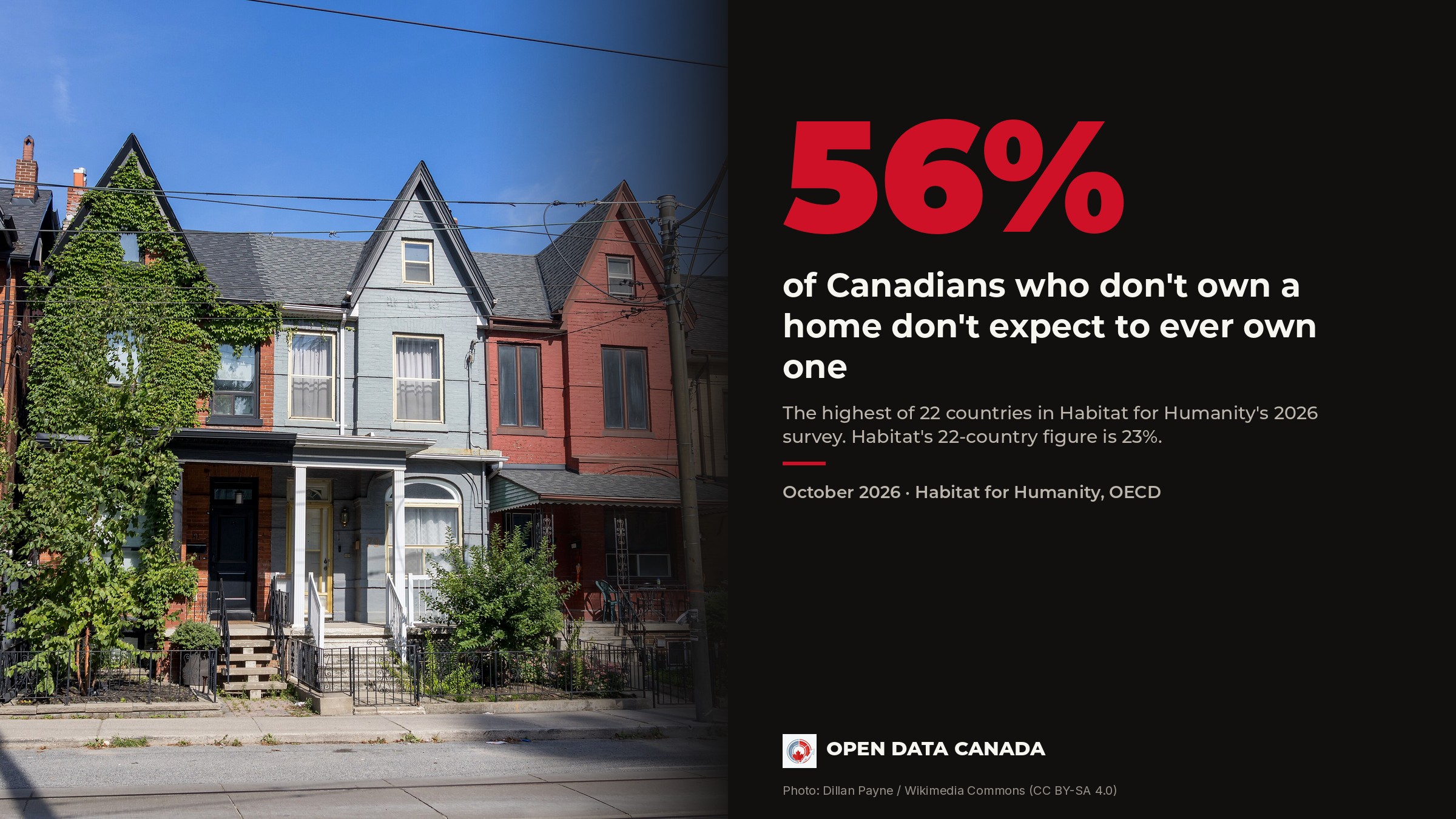
Life actually became less stressful when I stopped having the expectation that I’d ever own a home. If I do at this point, it’ll be a nice surprise or a sad event that led to me getting an unexpected amount of money.
To be real investing in a proper, comfortable retirement will probably do you better off at this point. Thats what I realized anyway.
You guys think you’re going to retire? Between inflation and healthcare I don’t expect to last much longer than I can stay employed.
Definately what I’m enjoying
Aussie here, what’s the primary cause for your house price bubble?
Here it was a stupid LNP policy to funnel investment dollars into land banking via negative gearing coupled with a capital gains discount; we are only now starting to roll back changes from 25 years ago.
We’ve lost an entire generation’s wealth to greed.
Foreign investment and greedy landlords.
capitalism and chasing passive income
so, greed
The cause is people treating houses as an investment, but most of those people are individual Canadians.
People like to blame foreign billionaires and corporations but my experience has been with Canadian house flippers and landlords wanting “passive income”. I’ve purchased 2 houses, both from house flippers, and I work with 4 people who are also landlords who brag/complain they make more money collecting rent than they do from their paycheque. I also believe that a huge portion of our elected officials are landlords themselves.
Private Equity firms (like blackrock) buying up all the homes to artificially inflate the price for profit. Some get rented out, but tons are just sitting literally empty
Others answered you with some uncritical, kneejerk explanations.
Yes, private property is a root cause since like, this is a capitalist system, but the idea of it being exceptionally “foreign,” or more exclusionary than comparable markets is ignoring why it is like this in Canada specifically. There’s a lot of long term contributors like suburban sprawl city planning without the same population explosions like in the US, conflicting interests and power dynamics between provincial and municipal govts that inhibits some practical regulatory responses, and a gradually disparate quality and cost of living as neoliberal politics eroded social welfare programs (healthcare, postsecondary education grants/ institutional funding, unemployment and disability support).
However, the big one that people credit for the specific boom of the past twenty years is actually how the current PM, Mark Carney, responded to the '08 financial crisis during his tenure as the Governor of the Bank of Canada. While Canada fared much better than other G7 states, it did so by reducing prime and encouraging spending, which meant that real-estate was a more reliable asset than usual under those circumstances; certainly more than businesses or labour. Since people were already severely underpaid in a system with less public supports and exponentially increasing infrastructure costs, this market bubbled with the Canadian economy balanced ontop of it (y’know, more than before).
Mix all that with Canada’s low and concentrated population, fewer career opportunities outside of those population centers, and neoliberalized framework, you have a system that relied on an unsustainably expensive real-estate market where regulators’ material interests (either individually or systemically since property value effects property tax and therefore city budgets) made it pretty much impossible for any bottom-up change to be implemented before a massive shift in material security for middle class workers.
So uh, guess when prime went up again and when more people started actually talking about how fucked the housing is here, and guess why it all came to a head around 2020.
Circling back to thank you for the candid, in-depth response.
Canada and Australia aren’t all too dissimilar, it seems.
Rampant speculation was ultimately responsible for our similar housing bubble here in Australia too. It’s taken a lot of political fortitude to introduce the necessary policies here to try and thread the needle to keep housing affordable for the population, without completely cratering values and destroying millions of owner-occupiers.
We are very lucky that our primary Conservative Party largely self-destructed last election cycle, and is too busy fighting off an insurgent far-right party to lose any threat to our (notionally) left Government.
I truly hope you guys can find your own safe path out of that minefield.
I’m honestly pretty ignorant of Australian politics of the last five years (the dumpster fire smoke makes kt kind of hard to see out of here), but that does sound a bit more favourable. Our con party has secured their vote, but hasn’t won an election federally in over a decade now due to our voting system (the only thing I’m thankful for from it).
But, our neoliberal party has dominated federal politics in that time, and has only gotten more aggressive in its policies; especially now that they have a majority and don’t have to negotiate with the socdems anymore. The current PM I mentioned in my comment has run an admin that is slashing environmental and agricultural regulations, massively expanded public investment in private extractive enterprise, and has responded to growing shelter insecurity by expanding subsidies for property owners.
So, we’ll see, but I can’t imagine Canada is going to get much of a reprieve while the state desperately appeals to the EU as part of its plan to diversify away from US capital. Most Canadian voters are more concerned about what Trump says about Canada than they are about what policies are actually passed here; local politics has gotten a bump in attention, so maybe there’s that.
Hope it works out for you guys too.
with so many rich foreigners buying it, i dont see how they will own one either.
Imagine if people burned investment homes to the geound on a regular basis. They would eventually become uninsurable.
Do you want to start?
Raises hand I’m part of this % without having been surveyed. Even living in what is consistently ranked one of the cheapest cities, there is no way to buy a house here that isn’t a matchbox house or condo.
Construction is slowing faster than demand, especially for ownership housing (particularly condominiums). Weak presales, high building costs, financing difficulties, and elevated inventories of unsold units are causing developers to delay or cancel projects.
The bigger shift is among the young. Ownership among Canadians aged 25 to 29 fell from 44.1% in 2011 to 36.5% in the 2021 Census. Statistics Canada found that, not counting those living with their parents, millennials owned at a lower rate at ages 25 to 39 than baby boomers or Gen X did at the same age: 49.9%, against 55.9% and 56.2%. And 55% of Canadians aged 18 to 29 lived with a parent in 2024.
I’m sure a few more decades of voting for the uniparty will fix this…
And a majority of the others are wrong.
Then why the hell aren’t more of you anti-property?
edit: Somebody responded with something funnier than I expected, and I’m leaving this here because I can actually see it being something some of you read and agree with without ever thinking twice. There’s a lot of good reasons why public housing isn’t a very pleasant way to live, but this is definitely my favourite to talk about when people start saying landlords are motivated to do anything for them: https://www.readthemaple.com/mp-landlords/
Because renting from the government isn’t a good option either. I’ve done that and you couldn’t pay me to do it again. If I’m gonna be stuck renting, give me a landlord who’s motivated to fix shit when I say it’s broken. That is emphatically not the government.
I don’t know what kind of altruistic landlords you’re renting from, but all the ones I have had dragged their feet and eventually “fixed” the problem in the cheapest and bare-minimum-that’s-technically-true way possible. They’d love nothing more than for me to leave so they could jack the rent 100%.
Mom and pop landlords, perhaps? That’s why I avoid those.
probably more expensive to them. but isnt corporate landlord just more expensive.
Everything’s more expensive these days. I’ve been in this place a decade and my Premier hasn’t fucked that up yet, so it’s not as expensive for me as it should be. But, the fact that my Premier could still fuck that up tomorrow is precisely why I don’t trust a government solution to that problem.
Then actually read my comment.
Oh yeah wow, I wonder if there’s a reason why socialized housing in Canada would be unpleasant.
This isn’t what I was suggesting either way, at least not directly, but I think it’s very funny to live in Canada and talk about landlords being motivated to fix things even though they’re hoarding shelter, and say that’s better because the same system that has purposefully insufficient disability support programs also doesn’t seem to want public housing to be comfortable; it’s almost like they’d do it on purpose.
Somebody better talk to that “government,” and get them to shake their heads straight, amirite? https://www.readthemaple.com/mp-landlords/
This person isn’t saying public housing is bad as an idea, they’re saying it’s bad in its current form.
And while it’s better than no shelter at all, it certainly is not ideal in its current form.
Yes, I know, I gave one explanation as to why it would be bad in its current form on purpose.
I mean, find a party that actually wants proper government-run housing and you’ll change my mind. Alternatively, you can explain what you mean by being anti-property if not that. Because, as a person with a disability who’s experienced both the housing and support, I can throw pretty much every government in this country farther than I trust them.
I’m getting the impression that you didn’t even read my comment or follow the link.
Anti-property could certainly involve socialized housing, but does not necessarily involve that. Property is a fundamental element in our social and political systems, and serves as a basis for every form of discrimination that exists within those systems. Anti-property could be limiting that effect – via rental regulation, shelter security subsidies, more robust social welfare programs to mitigate the harm and likelyhood of shelter insecurity (like disability) – or abolishing the concept altogether through yes, public ownership of shelter, but also through mutual aid and kinship organizing. The reason why I wasn’t specific is because I don’t necessarily subscribe to a specific set of politics to respond to the issue as much as I recognize the need for Canadians to address property as a fundamental threat to human life, instead of a glitch in the system.
I did read your comment. You did not clarify what you meant. And I did not follow your link because it lacked context.
Nothing you’ve actually described is explicitly anti-property. In fact, some of what you’ve described - for example, rental regulations - is already in place and not actually helping. For instance it’s been illegal to discriminate against the disabled for decades. So they don’t. Instead, they discriminate against your credit score (not protected), whether or not you make a minimum income (not protected), whether or not you can obtain positive references (not protected), etc, all of which are more likely to affect the disabled.
One thing that would absolutely help would be rent control that includes vacancy control. Ontario used to have that. Without it, the current rent control legislation only protects me as long as I stay here. It doesn’t protect you if I move out and you move in.
it’s a link to the Maple’s list of property-owning MP’s, y’know, the people who legislate property and rental laws. In the context of my comment, it indicated that this isn’t because vaguely “the government” is an issue, but that landlords are in the government, and since this is a system oriented around property as a commodity and thus the precarity of shelter, that means that they are highly incentivized to increase the value of rental properties commercial or residential.
You’ll also notice that I’ve mentioned the ableism specifically, as it emblemizes the cruelty of a system where shelter insecurity is required for people to be “motivated” to work, and people who cannot work are never guaranteed sufficient welfare support. These are not disconnected things.
Read through these fully, as people disagreeing with you do not always do so for the reasons and in the ways that you assume they will.
I feel it important to point out that rental laws in particular are provincial, not federal. Which is why Ontario and BC were the only provinces to have any kind of vacancy control, and which is why Ontario removed it 13 years after BC did. So unless that link includes provincial members of parliament as well, what you’re showing me is a list of people who are benefiting from a system they don’t have the authority to change.
Also: Please try not to explain ableism to someone who’s experienced it. You’re not going to route out discrimination by making it illegal. That’s been done already. Changing the ownership structure of a property doesn’t make that property more likely to accept a disabled tenant. Neither does making shelter a right (the TL; DR of that argument: “you have the right to a house, but not this house”). Now, if you want to talk about improving the rental or homeownership situation for everyone, then we can absolutely have that conversation. If you want to talk about abolishing homeownership entirely, we’re going to have a different conversation.
We could have so many more rights if it didn’t make the rich less money /s
That’s not really what they were saying. It’s also a solvable problem.
Not in Canada it’s not. We can’t even solve proper rent control, which includes vacancy control.
With long mortgage periods available, you would think there would be more home buyers using it instead of throwing money away with rent.
Rent isn’t necessarily throwing money away. You need to run the numbers for your scenario. Ben Felix has some great analysis on this. Home ownership as the only sensible financial move is a myth that really needs to die.
You’d think, but volatility in the job market makes mortgages extra risky. We’re watching two houses circle the drain as both incomes were killed by tariff or Ai layoffs and now only one spouse works while the other searches, and 1/3-1/4 house income is not supporting a house AND food.