
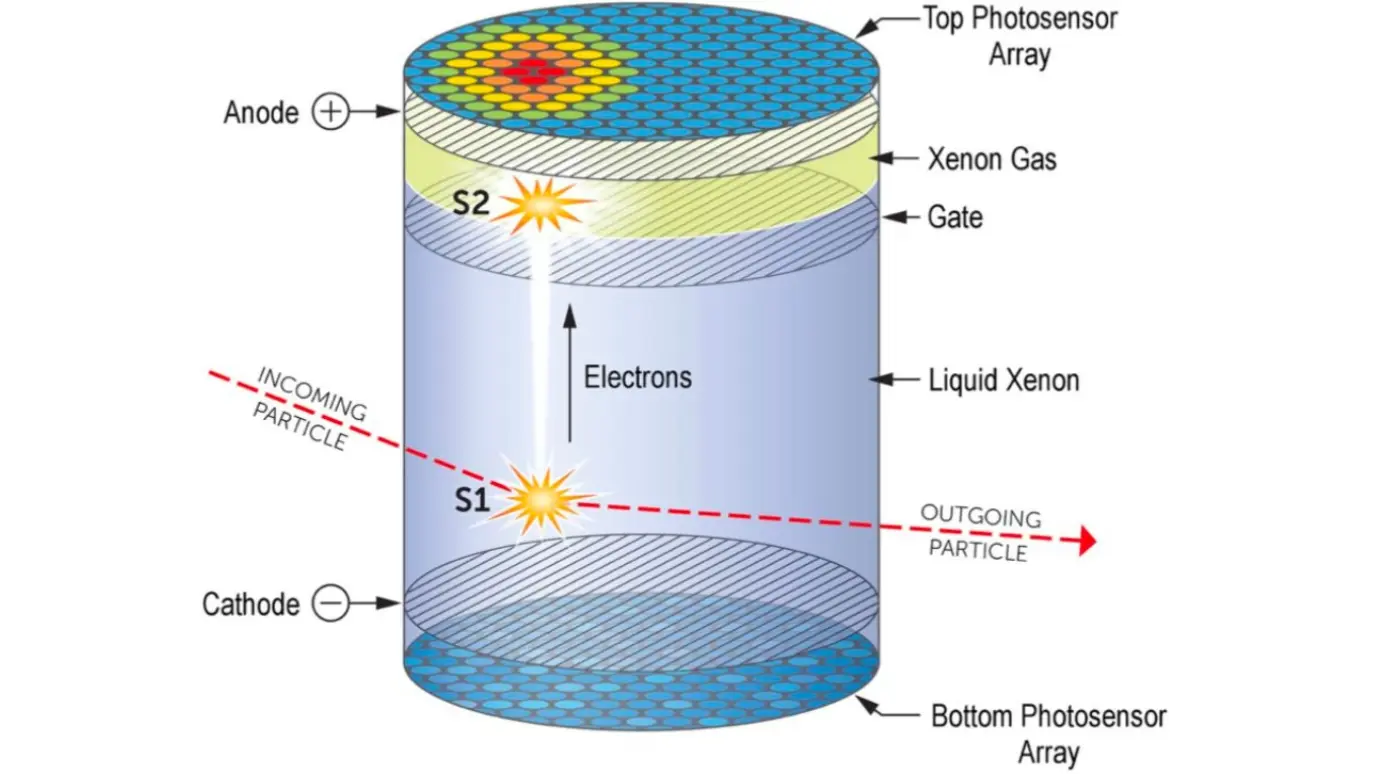
I post the detection of a alleged Dark matter particle, because it’s so vague, 1 data point per a test. Something is there but I don’t think it’s dark matter in the way it’s explained now.
Might it just be possible that because we built everything around this one theory that we can’t get physical proof that we are missing multiple different reasons and even fields.
I feel a lot of science has bogged it’s self down with theory and maybes for decades and decades now with no proof. And with the paper printer of Universities, even old or disprove theories keep getting posted.
I am not denying the existence of some kind of matter but everything is so varied I don’t believe just dark matter exists. And Science just keeps bogging it’s self down in theories and running around in circles
Wanna see a opinion or someone disproving me.
I need to go to bed so I won’t be answering if people have some questions in couple of hours.
Our current mathematical models are pretty damn close to how stuff works in reality. But like you said, for it to work out, you need to fudge the numbers a little. That’s dark energy.
Dark matter is, as far as we can tell, a real thing, just really hard to detect. It’s not a placeholder in the same way dark energy is. Something out there is exerting actual gravity.
Millions of man-hours have been spent on this. No one is going to prove or disprove it for you in some Lemmy comments. I would seek out talks from actual astrophysicists, not YouTube junk pop science.
“Dark matter” is both the imputed matter our models tell us has to be there to match our stellar observations, and the locally-testable explanation that all this imputed matter is some freakish particle we have literally never encountered before.
The former is about as close to a scientific fact as anything gets in astronomy, while the latter is more of a “if flies hatch from eggs where are the shells” kind of thing. It’ll be really significant if a “quasi local meta-particle” or whatever is found, so both excitement and skepticism are absolutely appropriate here.
I just wish pop science was a little clearer about the distinction between “this is what we see” and “this is why we think it’s like that.”