

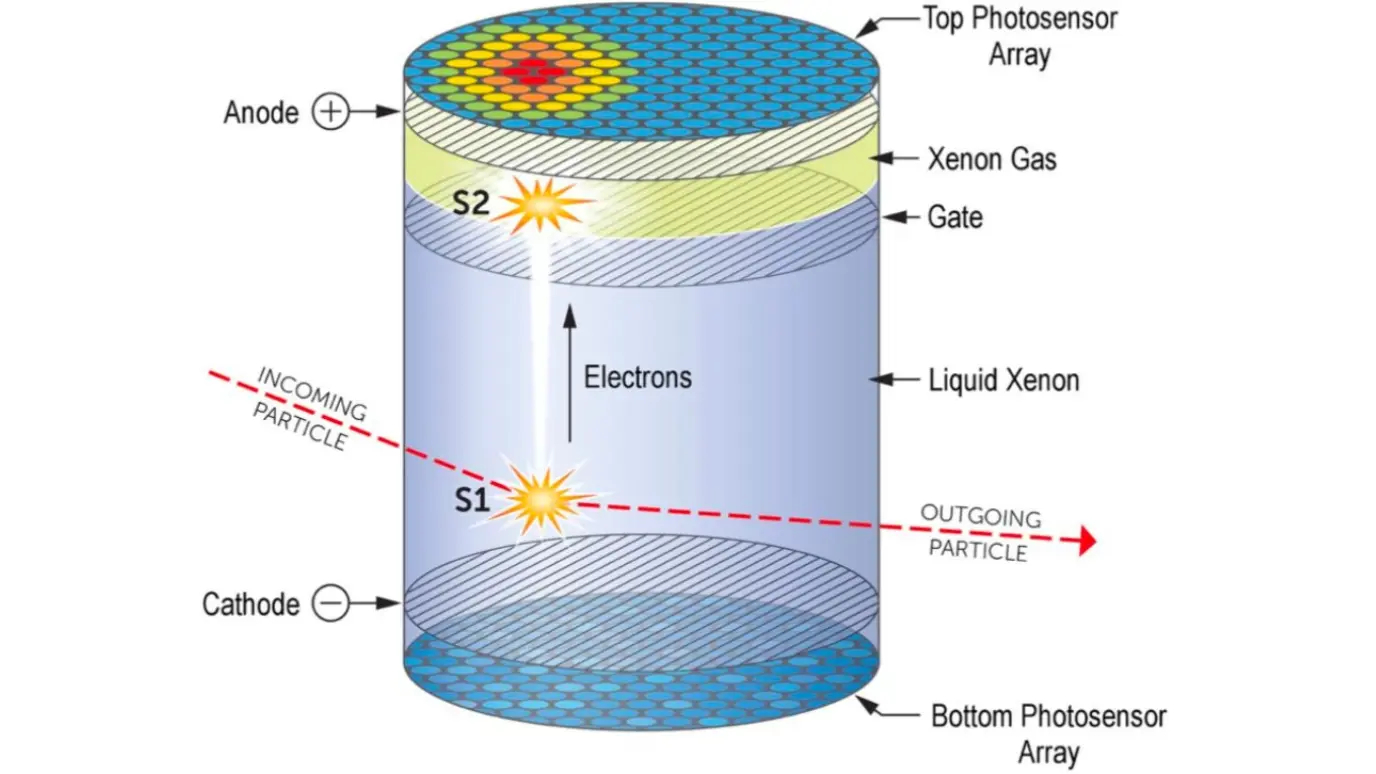
I post the detection of a alleged Dark matter particle, because it’s so vague, 1 data point per a test. Something is there but I don’t think it’s dark matter in the way it’s explained now.
Might it just be possible that because we built everything around this one theory that we can’t get physical proof that we are missing multiple different reasons and even fields.
I feel a lot of science has bogged it’s self down with theory and maybes for decades and decades now with no proof. And with the paper printer of Universities, even old or disprove theories keep getting posted.
I am not denying the existence of some kind of matter but everything is so varied I don’t believe just dark matter exists. And Science just keeps bogging it’s self down in theories and running around in circles
Wanna see a opinion or someone disproving me.
I need to go to bed so I won’t be answering if people have some questions in couple of hours.
There are some particles that don’t interact via the electromagnetic force. There are some particles that don’t interact via the strong force. And there are some particles that don’t interact via the weak force. All the particles we know, we’ve detected because they interact via at least one of those forces—but there’s no rule that says a particle must interact with any of them.
Why should we assume that every particle in existence must be conveniently detectable? It’s like a blind person assuming nothing can exist unless it makes a noise.
Well if the particle doesn’t interact with anything does it matter if it exists or not?
Dark matter particles would still interact with gravity, but not the other forces. Gravity by itself is too weak to detect individual particles, but the effects of large numbers of them could still be seen.
"If particle doesn’t interact with anything, does it exist? " is an interesting analog to “if a tree falls in a forest, does it make a sound?”
Why should we assume that particles exist when nobody can detect them?
Because the motion of the things we can see leads us to suspect that something else is there, even if we can’t see it directly.
To use the blindness analogy, it’s like if you’re talking to someone and their voice suddenly becomes muffled, you might suspect that some kind of “silent matter” is affecting the sound.