

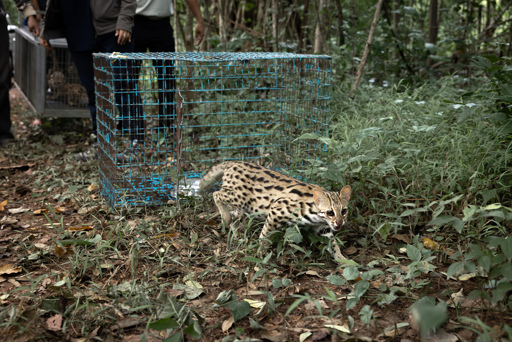
Highly adaptable to changing landscapes, leopard cats often live close to farms and villages. In northeastern Thailand, females are frequently found raising their litters in sugarcane fields. The tall leaves offer shelter from the sun, but proximity to humans exposes the cats to threats ranging from capture for the illegal trade to fires caused by agricultural burning — a traditional method used by farmers to clear fields and control pests.
Since 2023, the center says it has admitted between 40 and 65 leopard cats each year, up from an annual average of around 10 before that. Staff attribute the increase to a combination of worsening habitat fragmentation, rising fire activity and greater public use of the government’s wildlife hotline.
It is not unusual for farmers to find sick or lost leopard cat cubs in and around their fields, particularly during the burning season, which spans from January to April. Following recent government regulations on agricultural burning, fire rates on agricultural land in the northeast appeared to decline slightly this year. Yet overall fire activity increased this burning season, driven largely by forest fires. Between January and August 2026, the center admitted more than 60 leopard cat cubs from all over the region. According to the team, over half were found in charred fields, often with burn injuries.
Cats have nine lives, but sometimes they need a little help with it.