Sure, I’ll summarize what I remember of what Bakunin wrote the year before On Authority came out, What is Authority?, which you can guess by the name is an anarchist perspective on authority.
Engels claims organization requires authority, but it really only requires agreements, coordination, and sometimes rules; a strict hierarchy isn’t a necessary requirement for that to exist. Engels also says production requires obiedience, which doesn’t require an absolute authority as Engels asserts. Union elections, leaders accountable through recall votes, etc are also means of guiding production without relying on an absolutist revolutionary vanguard. The same goes for revolutionary leadership. It requires coordination, not domination by a central party.
It really boils down to do you think obedience is imposed or agreed upon. I’d like to live in a world where the workers have a voice rather than an authority telling them what they must do. It’s needlessly paternalistic and infantilizing in my view.
Engels claims organization requires authority, but it really only requires agreements, coordination, and sometimes rules; a strict hierarchy isn’t a necessary requirement for that to exist.
Yeah, horizontal organization has been very effective historically and definitely doesn’t create unspoken hierarchies that are actually far more damaging than explicit hierarchies under democratic control by the masses.
There’s definitely a single example in history you can point to of that working that won’t make everyone laugh as they post long winded essays about exactly how hierarchy was enforced in whichever organization or area you choose as an example.


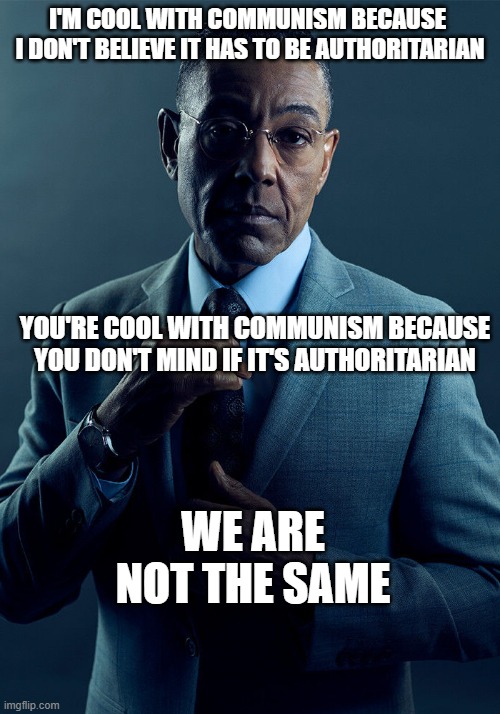
Ok, the actually rebut what he said. Should be simple if he’s wrong, shouldn’t it?
Sure, I’ll summarize what I remember of what Bakunin wrote the year before On Authority came out, What is Authority?, which you can guess by the name is an anarchist perspective on authority.
Engels claims organization requires authority, but it really only requires agreements, coordination, and sometimes rules; a strict hierarchy isn’t a necessary requirement for that to exist. Engels also says production requires obiedience, which doesn’t require an absolute authority as Engels asserts. Union elections, leaders accountable through recall votes, etc are also means of guiding production without relying on an absolutist revolutionary vanguard. The same goes for revolutionary leadership. It requires coordination, not domination by a central party.
It really boils down to do you think obedience is imposed or agreed upon. I’d like to live in a world where the workers have a voice rather than an authority telling them what they must do. It’s needlessly paternalistic and infantilizing in my view.
Yeah, horizontal organization has been very effective historically and definitely doesn’t create unspoken hierarchies that are actually far more damaging than explicit hierarchies under democratic control by the masses.
There’s definitely a single example in history you can point to of that working that won’t make everyone laugh as they post long winded essays about exactly how hierarchy was enforced in whichever organization or area you choose as an example.